

A roof is one of the most important parts of your home, protecting your property from rain, wind, frost and the changing British weather. However, years of exposure to the elements can leave roof tiles covered in moss, algae, lichen and grime. Over time, this organic growth can retain moisture, affect drainage and contribute to the deterioration of certain roofing materials.
While removing moss can dramatically improve the appearance of your roof, cleaning alone does not necessarily provide long-term protection. For homeowners who want to go a step further, combining professional roof moss removal, biocide treatment and a specialist water-repellent roof coating can help restore the appearance of existing tiles and protect them against future weathering.
At Universal Eco Homes, we take a comprehensive approach to roof restoration. By preparing the roof properly, treating remaining organic contamination and applying advanced ProPERLA roof coatings, we help homeowners protect suitable existing roofs, improve kerb appeal and reduce the need for repeated maintenance.
In this guide, we explain why moss develops, how professional roof cleaning works, why biocide treatment matters and how a breathable, water-repellent coating can help protect your roof for years to come.
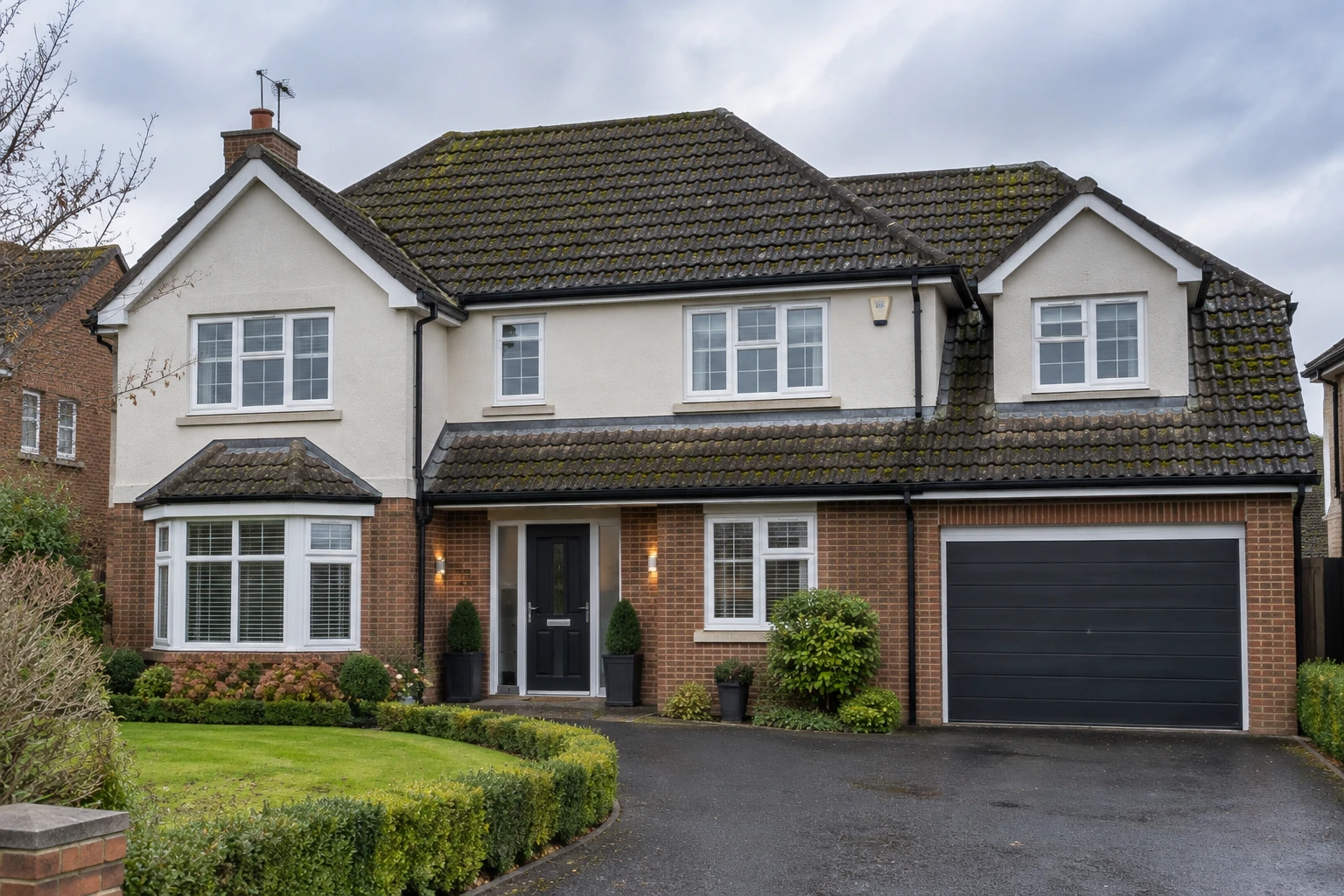
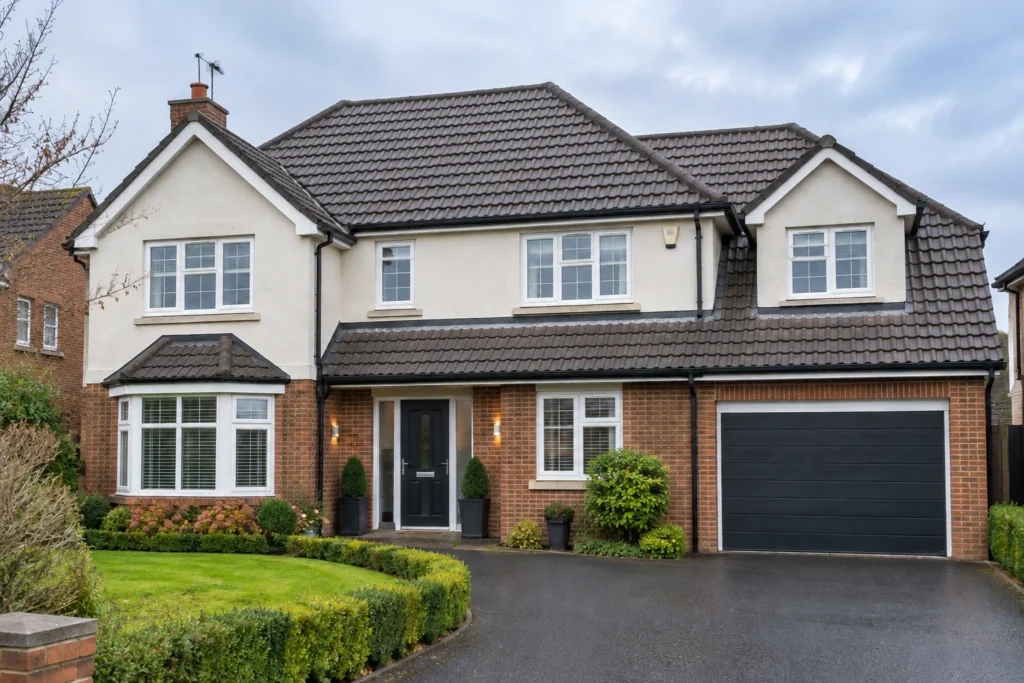
periods of limited sunlight create ideal conditions for moss, algae and lichen to establish themselves on roof tiles.
Roofs beneath overhanging trees, north-facing roof slopes and properties surrounded by vegetation can be particularly susceptible. Small amounts of moss may initially appear harmless, but growth can gradually spread across the roof, collecting dirt and retaining moisture.
There are several reasons to address a moss-covered roof before the problem becomes more extensive.
Moss absorbs and holds water rather than allowing the roof surface to dry quickly. On susceptible or deteriorating tiles, repeated wetting and drying can contribute to surface damage over time.
During colder weather, moisture within porous roofing materials can freeze and expand, potentially worsening existing weaknesses. The risk varies depending on the tile material, its condition and the severity of the weather.
As moss grows, it can become dislodged and wash into gutters and downpipes. Accumulations may restrict the flow of rainwater, particularly during periods of heavy rainfall.
Blocked gutters can contribute to overflowing water, damp problems around the property and damage to certain exterior surfaces. Removing excessive roof moss helps reduce the amount of organic debris entering the drainage system.
A roof covered in green moss, dark algae and lichen can make an otherwise well-maintained property appear neglected.
Cleaning removes accumulated organic growth and surface contamination, revealing the underlying roof tiles. Where tiles have become faded or weathered, a suitable coloured roof coating can provide an additional transformation.
Heavy moss growth can conceal individual tiles and make it harder to assess the condition of the roof surface.
Professional cleaning provides an opportunity to inspect accessible areas for visible damage, displaced tiles and other issues that may require attention before further protective treatments are applied.
The important point: moss removal is not simply about making your roof look cleaner. It is also an opportunity to improve roof maintenance and prepare the surface for longer-term protection.
Removing moss from roof tiles requires more than simply blasting the surface with water. Roofing materials vary considerably, and an unsuitable cleaning method can cause unnecessary damage.
Aggressive pressure washing, for example, can erode vulnerable tile surfaces, disturb existing finishes or force water into areas where it should not enter. The appropriate approach depends on the roof covering, its age, its condition and the extent of the contamination.
At Universal Eco Homes, we assess the roof before determining the most suitable cleaning method.
Before work begins, the roof should be assessed for visible damage, excessive moss growth, vulnerable tiles and any other issues that could affect the cleaning process.
Where appropriate, the inspection should also consider the condition of ridge mortar, flashings and accessible roof drainage components.
This initial assessment helps establish whether the roof is suitable for cleaning and subsequent coating, or whether repairs should be completed first.
The next stage is the careful removal of established moss, algae and other accumulated debris.
The cleaning method must be appropriate for the roof material and its condition. The objective is to remove unwanted growth without causing avoidable damage to the tiles or surrounding property.
As the moss is removed, the roof’s original surface becomes visible again, allowing its condition to be assessed more effectively.
Removing visible moss is an essential first step, but it does not necessarily eliminate all organic contamination.
Fine growth, residual staining and microscopic biological material may remain on the tile surface. This is particularly relevant when moss has been established for several years.
Thorough preparation creates the conditions needed for effective biocide treatment and, where specified, a protective roof coating.
Think of roof cleaning and biocide treatment as two complementary stages rather than interchangeable services.
Physical removal deals with the established moss and debris that can be seen on the roof. The biocide treatment then helps control remaining biological contamination, reducing the likelihood of rapid regrowth.
Without suitable treatment, a freshly cleaned roof may become susceptible to renewed growth, particularly in damp, shaded locations.
The time required for a biocide treatment to take effect depends on the product, the type of growth, the weather and the condition of the roof.
Some organic staining may fade gradually after treatment as dead material breaks down and rainfall helps remove the remaining residue. The roof may therefore continue to improve in appearance after the initial cleaning has been completed.
It is important to follow the manufacturer’s application instructions and allow the specified treatment and drying times before proceeding with any subsequent coating.
A suitable biocide treatment helps reduce future moss and algae growth, but no treatment should be regarded as a permanent guarantee that organic growth will never return.
Environmental conditions continue to influence the roof. Overhanging trees, persistent shade, nearby vegetation and prolonged dampness can all contribute to renewed growth.
For homeowners seeking a longer-term solution, combining thorough cleaning and biocide treatment with a suitable protective roof coating can provide an additional layer of defence.
Once the roof has been cleaned, treated and properly prepared, applying a specialist roof coating can help protect the tiles while improving the overall appearance of the property.
However, not all roof coatings are the same. A conventional paint or sealer may behave differently from a specialist coating designed to repel liquid water while allowing water vapour to pass through the treated material.
At Universal Eco Homes, we use premium ProPERLA roof coating systems for suitable roofing applications.
These advanced coatings are designed to provide durable surface protection, restore the appearance of weathered tiles and help resist the effects of the British climate.
A water-repellent roof coating creates a surface that makes it more difficult for liquid water to penetrate the treated tile.
ProPERLA uses super-hydrophobic technology, which encourages water to form droplets and run off rather than being readily absorbed into suitable mineral roof tiles.
This matters because excessive water absorption can contribute to deterioration in susceptible roofing materials, particularly where repeated wetting, drying and freezing occur.
By reducing water absorption, a suitable coating can help keep tiles drier and improve their resistance to certain forms of weather-related deterioration.
An important feature of a properly specified breathable roof coating is its ability to resist liquid water without unnecessarily preventing water vapour from escaping.
Traditional non-breathable coatings can create problems if moisture becomes trapped within a roofing material. Depending on the construction and condition of the roof, this can contribute to coating failure or deterioration.
ProPERLA roof coating systems are designed to combine water repellency with breathability, allowing water vapour to pass through the treated material while helping to limit liquid water absorption.
This balance is particularly important for porous mineral roof tiles.
The aim is not simply to cover the roof with a waterproof film. It is to provide a protective treatment that works with the properties of the roofing material.
The answer depends on the product being used.
Some conventional sealers form a surface film, whereas specialist coatings such as ProPERLA are designed to bond with or penetrate suitable mineral substrates while maintaining water-vapour permeability.
This distinction matters because effective roof protection should not rely solely on creating a thick, impermeable layer over the tiles.
The correct product must be selected for the existing roof covering, and the tiles must be properly cleaned and prepared before application.
Homeowners understandably want a solution that lasts, rather than paying for repeated cleaning, painting or maintenance every few years.
Specialist roof coatings are designed to provide longer-term protection than a simple cosmetic treatment. ProPERLA states that its roof coating and water-repellent systems have a 25-year life expectancy, supported by accelerated-weathering testing, and that its products carry a 10-year manufacturer’s guarantee, subject to the applicable product terms.
These are manufacturer-stated performance expectations, not a promise that every roof will remain unchanged for 25 years in all conditions.
Actual performance depends on the selected product, the suitability and condition of the roof tiles, preparation, correct application and environmental exposure.
Nevertheless, a professionally applied coating can be a valuable investment for homeowners who want to restore and protect a suitable existing roof for the long term.
Even a high-performance coating cannot compensate for a poorly prepared or unsuitable surface.
Applying a coating over moss, algae, dirt or loose material can compromise adhesion and affect the quality of the finished result.
For this reason, a proper restoration system should include:
Assessment of the existing roof and its suitability for treatment.
Removal of established moss, algae and other contamination.
Appropriate biocide or cleaner treatment in accordance with product instructions.
Replacement or repair of damaged tiles and relevant defects before coating.
Adequate drying and surface preparation.
Application of the specified coating at the correct coverage rate.
This preparation helps create the conditions needed for the coating to perform as intended.
A professionally applied roof coating can provide several practical benefits beyond restoring colour.
1. Reduced Water Absorption
The hydrophobic properties of suitable roof treatments help reduce the amount of liquid water absorbed by susceptible tiles.
This can help limit moisture-related deterioration and improve resistance to certain weathering processes.
2. Protection Against Weathering
Roof tiles face years of exposure to rainfall, temperature changes, wind and ultraviolet radiation.
A suitable protective coating helps shield the treated surface against environmental exposure and can slow some forms of deterioration.
It does not, however, repair structural damage or replace the need for appropriate roof maintenance.
3. Reduced Conditions for Moss and Algae Growth
Moss and algae favour damp conditions. By helping the treated tile surface shed water more readily, a water-repellent coating can make conditions less favourable for some types of organic growth.
When combined with thorough cleaning and biocide treatment, this can help the roof remain cleaner for longer.
The result depends on local conditions, and periodic inspection may still be necessary.
4. Improved Resistance to Frost-Related Damage
Where porous tiles absorb moisture, freezing conditions can contribute to surface deterioration.
Reducing water absorption can help lower this particular risk on suitable roofing materials. It cannot eliminate all frost damage, especially where tiles are already cracked, defective or otherwise compromised.
5. Restored Colour and Kerb Appeal
For faded concrete tiles or roofs that have become uneven in appearance, a coloured coating can provide a more consistent finish.
Homeowners can choose a suitable colour to complement their windows, exterior walls and other features of the property.
For those who want to retain the existing appearance of suitable tiles, a clear water-repellent treatment may be an alternative.
6. Potentially Lower Long-Term Maintenance Requirements
A cleaner, treated and coated roof may require less frequent moss removal or cosmetic restoration than an untreated roof in similar conditions.
Although periodic inspections remain important, investing in a complete restoration system can help reduce the need for repeated maintenance interventions.
When a roof looks tired or heavily moss-covered, some homeowners assume that replacing it is the only way to achieve a lasting improvement.
In reality, the appearance of a roof does not always reflect the condition of its underlying structure.
Where the tiles remain serviceable and the roof is otherwise suitable, professional cleaning, treatment and coating may offer an alternative to replacement.
A restoration project can help retain existing roofing materials, improve appearance and provide additional protection without the disruption associated with a complete re-roof.
However, coating is not a substitute for necessary repairs. A roof with widespread tile failure, significant structural problems, persistent leaks or extensive deterioration may require more substantial work.
The sensible approach is to assess the roof first, identify any defects and determine whether restoration is an appropriate option.
At Universal Eco Homes, our aim is to help homeowners understand the condition of their roof and choose a solution that makes sense for their property.
The right choice depends on whether your priority is preserving the original appearance of the tiles or transforming the look of your property.
Clear Water-Repellent Roof Treatment
A clear treatment is designed to provide protection without significantly changing the appearance of suitable existing roof tiles.
It may be appropriate for homeowners who like their current roof colour but want to improve resistance to water absorption and weathering.
The surface must still be cleaned and prepared correctly before application.
Coloured Roof Coating
A coloured roof coating provides protective treatment alongside a visible change in appearance.
It can be particularly effective for faded, weathered or discoloured concrete roof tiles, giving the roof a refreshed, more uniform finish.
Available colours depend on the coating system and the specific project. A professional assessment helps establish which finish is appropriate for the roof.
The key difference: a clear treatment focuses on largely invisible protection, while a coloured coating combines protection with a visual transformation.
Both options require the correct preparation and must be suitable for the existing roof material.
At Universal Eco Homes, we understand that homeowners want more than a temporary improvement. They want a roof that looks better, performs reliably and receives the right protection for the years ahead.
Our roof restoration service combines careful preparation with specialist treatment and coating options for suitable existing roofs.
Our approach includes:
Professional moss removal: removing established moss, algae and accumulated debris using an appropriate cleaning method.
Biocide treatment: helping control remaining organic contamination and reduce the likelihood of rapid regrowth.
Specialist ProPERLA coatings: providing water-repellent protection and, where selected, a refreshed coloured finish.
Breathable protection: using suitable coating systems designed to resist liquid water while allowing water vapour to pass through the treated material.
Roof assessment: identifying visible defects and considering whether restoration is appropriate before coating.
Long-term value: helping homeowners explore restoration before committing to the cost of replacing an otherwise serviceable roof.
Universal Eco Homes is a family-run business offering specialist roof cleaning and coating services across our service areas in England.
As a ProPERLA Platinum Applicator, we use specialist products and application methods to deliver roof restoration solutions designed around the needs of each property.
We believe the best results begin with understanding the roof, preparing it properly and selecting a treatment suited to its condition.
IMPORTANT NOTICE!! There are a number of companies impersonating our genuine business to mislead customers. Universal Eco Homes, The Roof Cleaning Experts and The Loft Insulation Experts are a part of Universal Eco Homes Group Ltd. We are not connected to any other companies in any other form, either implying to be us or our aftercare team. We care about all our customers, and if you are unsure, please call our head office for reassurance 0800 047 2404